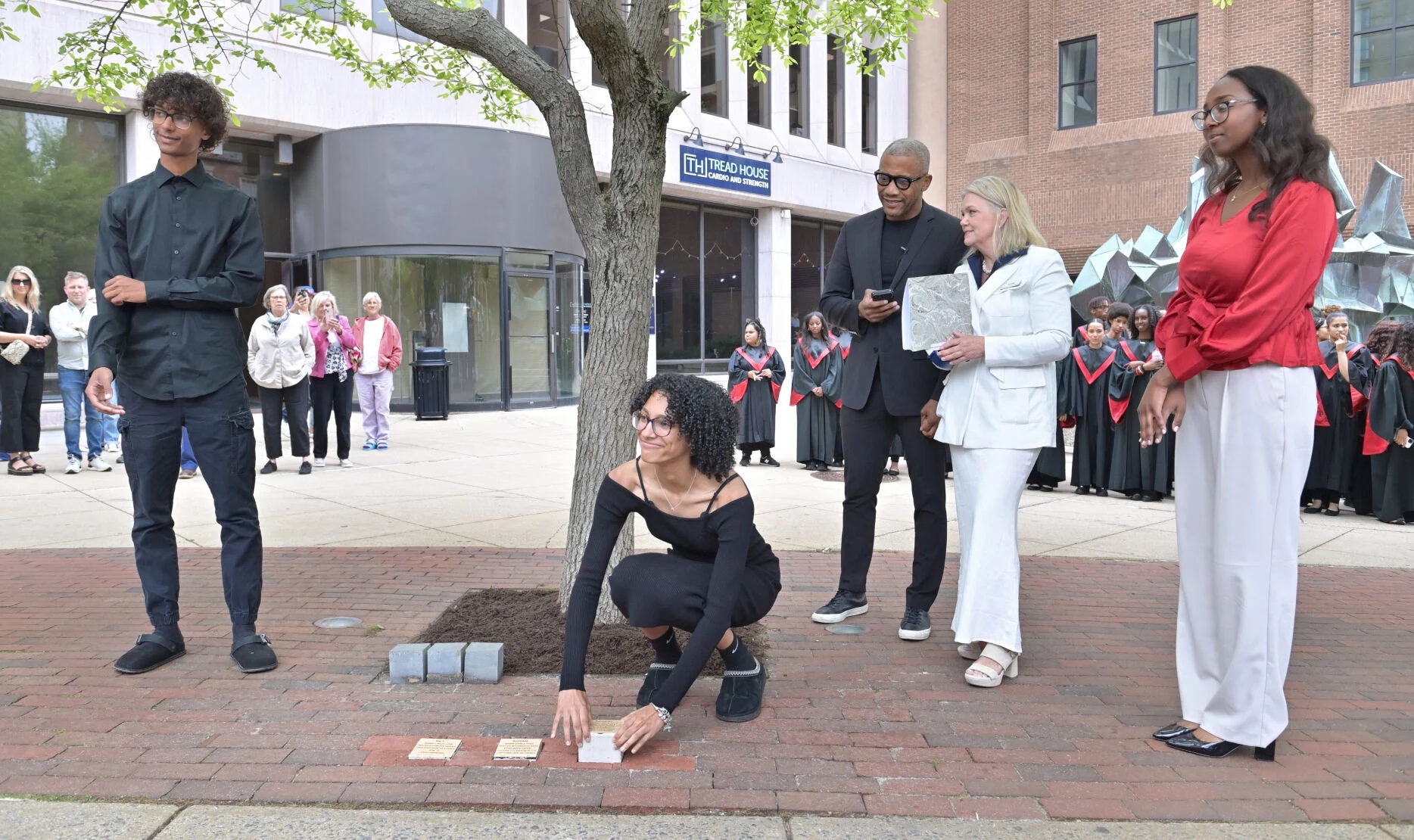
SUZETTE WENGER | Staff Photographer
By Sarah Nicell on LancasterOnline.com on June 1, 2025
Historians don’t know much about Susan, Robert, Bet and Frank, who lived in Lancaster in the 18th and 19th centuries.
Their ages, heights, births and deaths are inconsistently recorded. There are no last names to track because they likely had none.
That’s because Edward Hand, an Irish-born American general, physician and Lancaster politician, enslaved them, the first three at his Lancaster city home on the southwest corner of Penn Square and Frank at his plantation.
Staff at Historic Rock Ford, the preserved mansion in southeastern Lancaster city where Hand once lived, acknowledge its history with slavery. But three years ago, Rock Ford leaders wanted more: to memorialize Frank, the only known enslaved person who lived there.
“Most people who come into the house who hear that there was an enslaved man on the property are shocked,” longtime volunteer Pamela Stoner said. “Minds go to Pennsylvania being a Northern state. It’s a common misconception.”
Then, Stoner stumbled upon the Witness Stones Project: a Connecticut-based initiative to restore the history and humanity of local enslaved people.
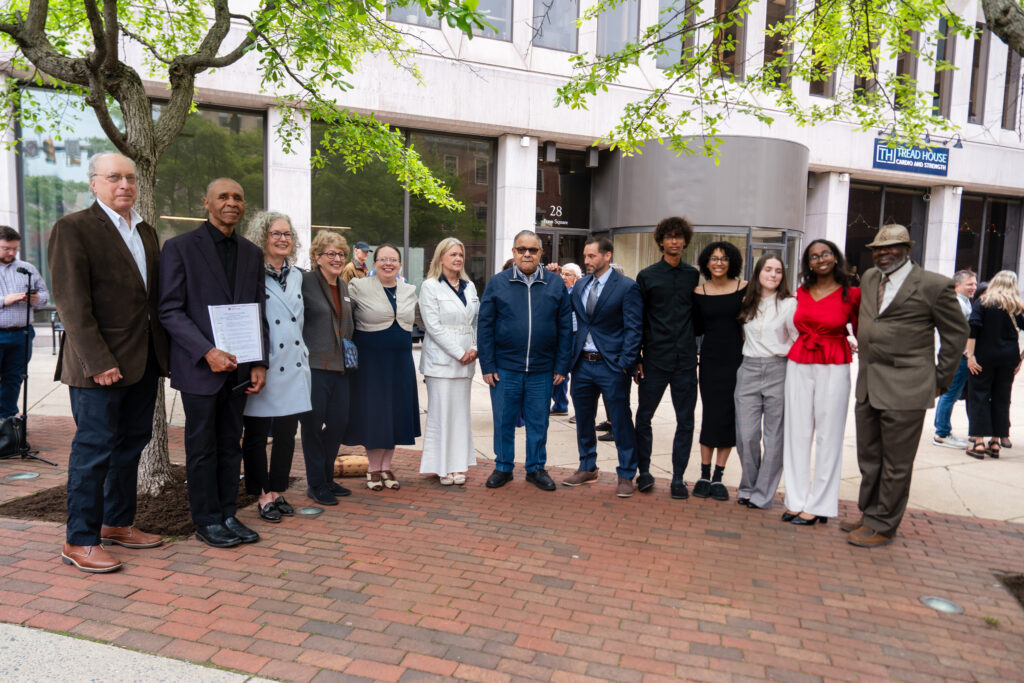
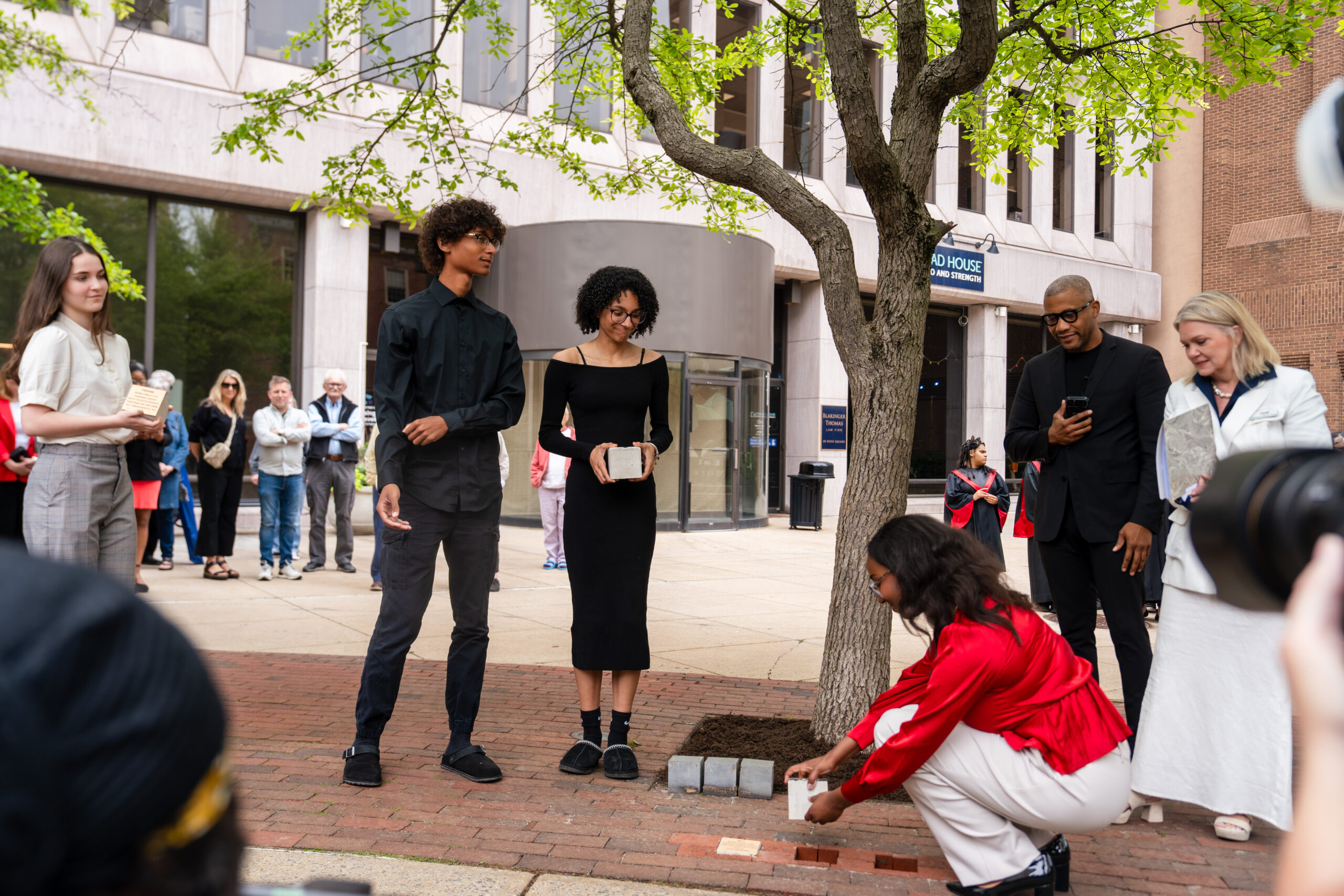
On Tuesday, McCaskey High School students placed 4-by-4-inch stones into the brick ground at the corner of South Queen and West King streets. McCaskey’s Voices of Freedom choir sang over the rushing sound of cars.
One stone honors Sue, another Bob and another Bet. Although the exact address of Hand’s first Lancaster city residence is unknown, this spot is close. Frank’s stone will soon lower into the ground at Rock Ford.
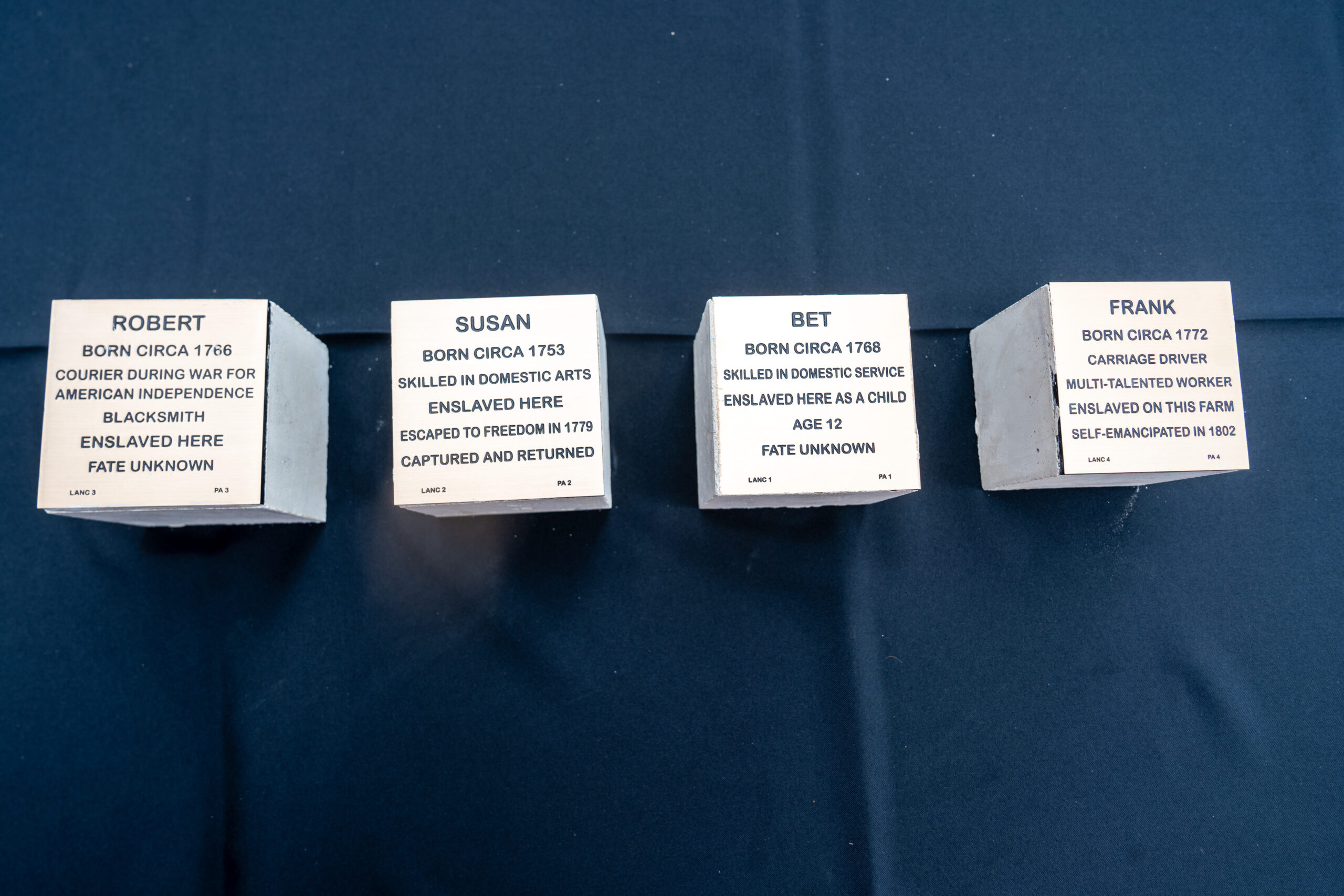
The stones feature only a few lines, as many as will fit on the tiny surface area — and in some cases, that’s all the biographical information that exists. Hand’s name is not included.
“Robert, born circa 1766. Courier during war for American independence. Blacksmith. Enslaved here. Fate unknown.”
“Susan, born circa 1753. Skilled in domestic arts. Enslaved here. Escaped to freedom in 1779. Captured and returned.”
“Bet, born circa 1768. Skilled in domestic service. Enslaved here as a child. Age 12. Fate unknown.”
“Frank, born circa 1772. Carriage driver. Multi-talented worker. Enslaved on this farm. Self-emancipated in 1802.”
How Witness Stones work
Stories like these span the Northeast, even as historical accounts focus on the American South.
That’s why former Connecticut middle school history teacher Dennis Culliton started the Witness Stones Project in 2017, inspired by small memorials across Europe — Stolpersteine, or “Stumbling Stones” — commemorating lives taken by the Nazis during World War II.
Lancaster city’s Witness Stones, funded through summer 2027 by local donors, are the first in Pennsylvania, according to Witness Stones Executive Director Patricia Pheanious. School districts and historical institutes have installed nearly 300 stones across Connecticut, Massachusetts, New York, New Jersey, Rhode Island and California.
Rock Ford, in collaboration with the African American Historical Society of South Central Pennsylvania and the School District of Lancaster, plans to install 25 stones annually for three years, a total of 75 stones by 2027.
Most stones will find homes embedded in the brick area between the concrete sidewalk and the curb on the first two blocks by Penn Square, on King and Queen streets.
Rock Ford already has contacted all parties who could see a stone placed in front of their homes or businesses, and anyone can decline the installations.
We have so far been very encouraged by the support we are receiving from businesses and property owners,” Christina McSherry, executive director, said by email.
Culliton provided the city with the first four stones, engraved with the names and biographical facts of the people the Hand family enslaved. But local volunteers and businesses will manufacture the remaining 71 markers, though the exact groups aren’t definite yet.
Addressing Lancaster city’s wrongs
“It is a reckoning,” Nelson Polite Jr., African American Historical Society of South Central Pennsylvania president, said at Tuesday’s ceremony. “A reckoning with the past.”
Pennsylvania didn’t require slaveholders to register the people they owned until the Pennsylvania Gradual Abolition Act in 1780. Even after, surviving records are scarce.
Still, between 1780 and 1830, University of Iowa history professor Cory Young said that slaveholders registered at least 1,048 people as property on the land that is now Lancaster County. His research focuses on slavery in the American North, which made him a valuable resource for Rock Ford’s project.
A fifth of those people, 209, lived in what is now Lancaster city.
“It’s the details that are lost to us,” Young said. “We’re never going to be able to know as much as we want about particular enslaved people.”
For this project, local researchers tracked around 400 enslaved people living in the city during its first century, according to Rock Ford’s Stoner, though the real count is likely much higher since Lancaster Borough existed decades before the Gradual Abolition Act.
“Obviously this project could go on well beyond three years,” McSherry said.
A 19-member advisory council oversees the Lancaster project, with representation from local groups including Rock Ford, the African American Historical Society of South Central Pennsylvania, McCaskey High School, LancasterHistory and the Witness Stones Project. The council has yet to decide which of the 400 people on record will have priority for the remaining stones.
A high school curriculum
Todd Mealy, a history teacher and football coach at McCaskey High School, sat to the left of the podium at Tuesday’s ceremony. About 25 of his students sat in white foldout chairs in the audience, and four waited beside him, prepared to speak.
Mealy, who has published works about slavery in and out of Pennsylvania, was recruited to the Witness Stones project last summer, after Rock Ford reached out to implement a Witness Stones curriculum, a staple of the project in several states. It took one meeting to get him on board.
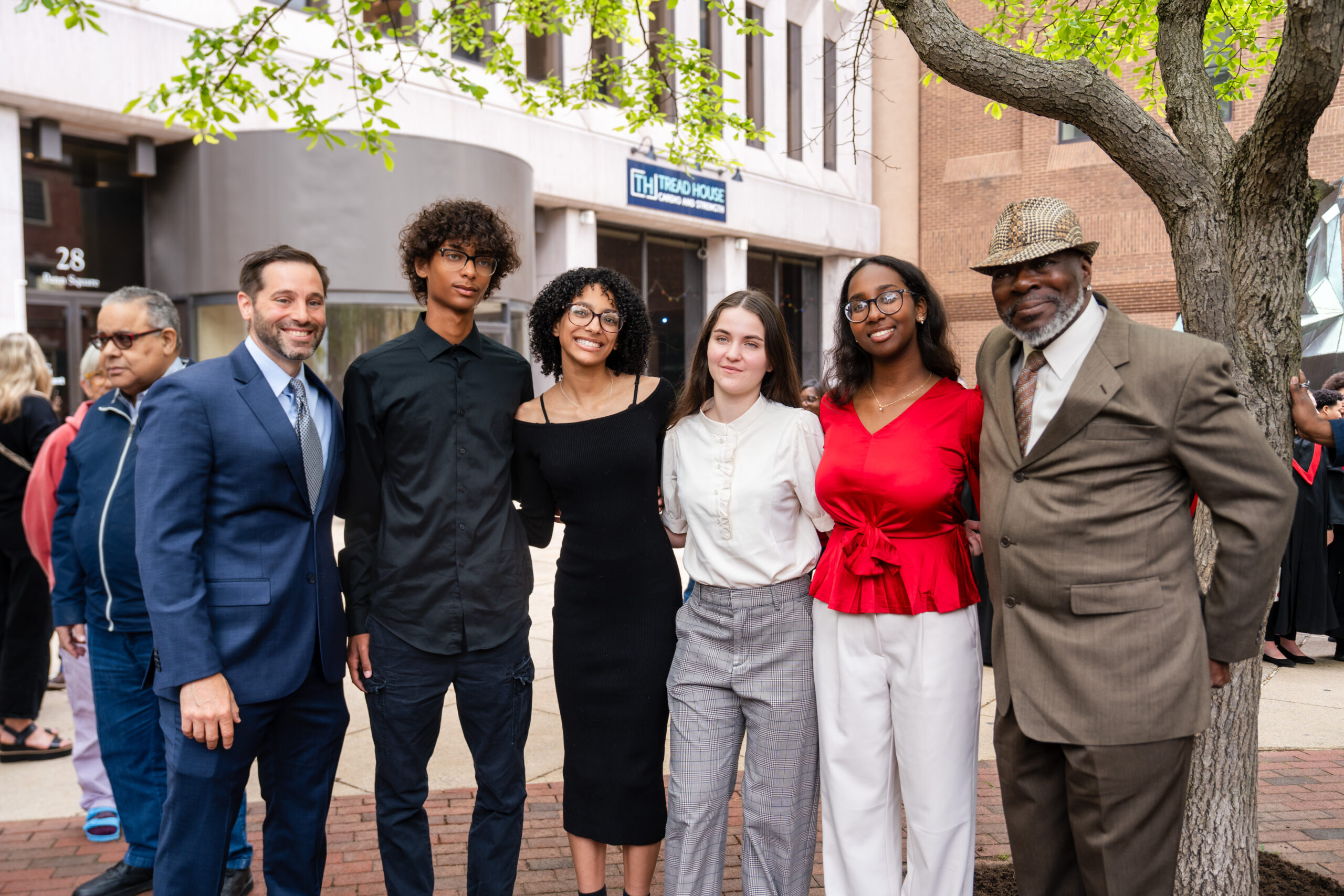
Students Tyran London, Makayla Ressel, Hasset Tesfaye Desalgn and Hana Rebek took turns at the microphone sharing the biographical information they had collected about Susan, Robert, Bet and Frank.
Tesfaye Desalgn described Susan’s harrowing stillborn childbirth during her detention in Philadelphia.
“Her story is about a woman who tried to save her child,” Tesfaye Desalgn said, “who tried to save herself.”
This year, 35 of Mealy’s students researched the four enslaved people in his International Baccalaureate History of the Americas class, an advanced-placement African American Studies course and the Leon “Buddy” Glover Public Service Project program that Mealy oversees.
Since January, his students have examined primary and secondary documents about slavery in Lancaster and beyond. They read church records, inventory lists, letters and runaway advertisements, or ads offering compensation for people who captured and returned escaped slaves, in the Lancaster Intelligencer.
Then, the students worked alone or in teams on a personal project commemorating the lives of those enslaved by the Hands.
“Any observer watching these students would be moved knowing they’ll be future leaders in their community,” Mealy said.
The projects vary by medium. One group is producing a children’s book with an academic publishing company. Others prepared documentaries, museum exhibit panels, original music and wood carvings.
While the curriculum will mostly remain the same for the next two years, the enslaved people whom students research will change as the city’s Witness Stones advisory council chooses which local enslaved people to focus on next.
“Never before have they appeared in the stories we tell about our own community,” Mealy said. “That ends today.”
The first four
The surviving historical records about Susan, Robert, Bet and Frank — Black adults and children enslaved by 18th-century Lancaster soldier and politician Edward Hand — are limited at best.
Nothing historians know was written by the four enslaved people. Accounts come from their captors and records mandated by the Pennsylvania government.
But here is the information researchers have gathered about them, from evidence scattered across primary and secondary source materials in Pennsylvania.
Susan
Susan, or Sue, arrived to serve Edward Hand’s wife, Katharine (“Kitty”), at their Lancaster city home during the summer of 1776, taken from Long Island, where Edward Hand led troops. Hand purchased Sue for 43 pounds, more than $12,000 today.
Three years later, Susan escaped, and Hand placed several advertisements in a Philadelphia newspaper offering rewards for her return. Hand described her as between the ages of 25 to 30 (depending on the ad) and between 5 feet, 2 inches and 5 feet, 6 inches tall.
She was dressed in a blue and white linen gown and petticoat, leading researchers to label her a seamstress. Hand believed Susan was either returning to Long Island or following the 4th Regiment of Light Dragoons, a mounted military branch in Philadelphia that had recently encamped in Lancaster, with a white woman named Captain Molly, or Margaret Corbin.
By this time, Susan was pregnant. Under her enslavement, her child, if born alive, would also remain enslaved forever. But by 1779, preserved letters indicate she was recaptured and detained in a complex for criminals in Philadelphia.
There, Susan endured a traumatic labor and gave birth to a stillborn child. Jasper Yeates, Kitty’s uncle, wrote that the childbirth had left Susan close to death. After receiving a pound of chocolate and a coarse pair of woolen stockings for her pains, the Hands seemingly re-enslaved Susan in their city household. Little else is known, though she likely didn’t accompany the Hands to their plantation at Historic Rock Ford.
Robert
Edward Hand purchased Robert, or Bob, a boy around 11 years old, in Long Island in June of 1776. Hand sent him to his wife “almost naked,” according to a letter to Kitty. Hand’s early letters called him Robert, until Hand hired a white courier during the Revolutionary War named Robert Wilson; then, Hand switched to “the Boy,” “Boy Bob” and finally, “Bob.”
“He is a fine smart boy and may be of use to you until you can get a girl,” Hand said in his first letter regarding Bob.
By the time the Hands had to legally register him as property in 1780, Bob was only 14 years old.
From Hand’s personal letters, Bob carried money and valuables from Hand during wartime to Kitty’s home in Lancaster.
Today, his Witness Stone refers to him as a wartime courier and a blacksmith.
Aside from a few more mentions of “Robert” and “Bob” in records, little else is known about him.
Bet
Historians today know the least about Bet. Her first and only reference comes in 1780, when the Pennsylvania Gradual Abolition Act required the Hands to legally register the people they enslaved.
The record calls her “mulatto,” now considered an offensive term for a biracial person of white and Black ancestry. The name “Bet” was common among enslaved women as “the familiar form” of the name “Elizabeth,” according to Rock Ford’s website.
Frank
The first indirect mention of Frank, around 30 years old, came in 1800, when Hand was taxed for an enslaved person without reference to sex or name. Frank was the only person of the four enslaved by the Hands to work at Rock Ford. The Hands moved there from their city home in 1794.
Frank worked as a carriage driver, which brought him to St. James Episcopal Church. Hand and Frank likely attended as congregants, though Hand sat at the front and Frank was segregated to the balcony or the bench, according to a documentary directed by McCaskey High School student Hana Rebek for her history class.
But in March of 1802, historical records show Frank escaped from the Hands. In the months that followed, Hand placed advertisements in the Lancaster Intelligencer offering monetary rewards for his capture.
The ads continued until just after Hand’s death in September that year, when the debt faced by the Hand family became their priority. Rebek said the debt may have fueled Frank’s escape, since it meant his captors could have arranged an impending sale to slaveholders in the American South.
Rebek said Frank likely adopted the false identity of another Black man, Prince Wheel, and acquired Wheel’s freedom papers after his death to create a smoother escape.
There are no surviving records of Frank’s capture, so it is assumed he remained free.